
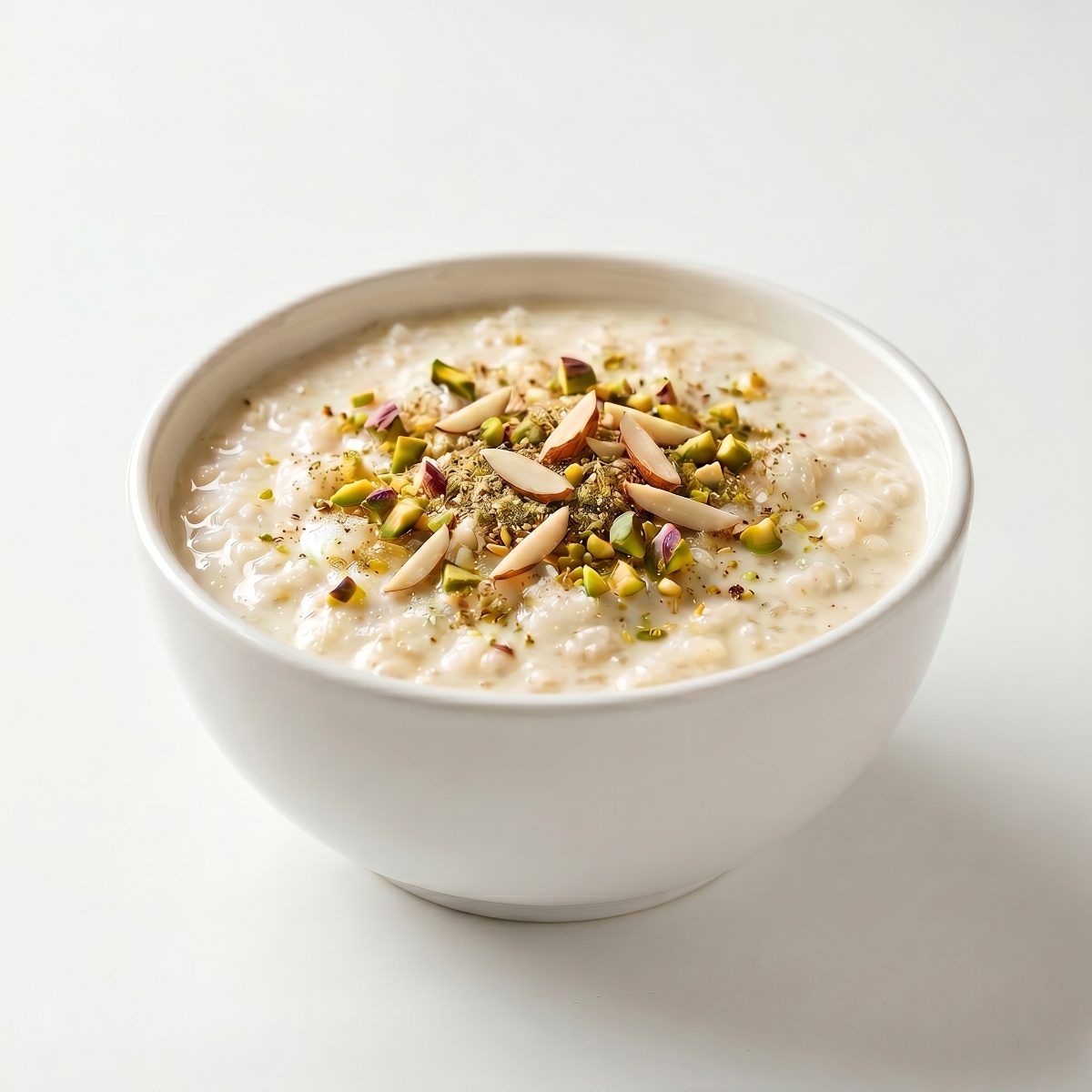
Kheer
Description
Rice pudding simmered in milk with sugar, cardamom, and nuts
Dish Information

Order Information
Let our chefs know how you'd like your dish prepared
0/200Kheer — Traditional Indian Rice Pudding with Cardamom, Saffron & Nuts at Raunak, Milpitas
Kheer is one of the oldest recorded desserts in human history. References to a milk-and-rice pudding appear in ancient Ayurvedic texts and in the *Mahabharata* (circa 400 BCE), making it a dish with over 2,000 years of continuous tradition. Known as *payasam* in South India and *kheer* in the North, it is the universal temple offering — poured as *prasad* (blessed food) at Hindu ceremonies and served at every major life milestone from birth ceremonies to weddings. The word *kheer* derives from the Sanskrit *ksheer*, meaning "milk," reflecting its elemental simplicity: rice, milk, sugar, and the patience to simmer them together until they become something greater than their parts. At Raunak, we slow-simmer long-grain basmati rice in full-fat milk until it thickens naturally — no cornstarch, no shortcuts. We sweeten with sugar, infuse with green cardamom and a thread of saffron, and finish with toasted almonds, cashews, and golden raisins. Served chilled or warm.
Nutrition notes
Kheer is one of the most balanced Indian desserts. Milk provides complete protein, calcium, and vitamins B12 and D. Basmati rice is low in sodium and easy to digest. Cardamom has digestive and antimicrobial properties, while saffron contributes antioxidants. Nuts add heart-healthy fats, fiber, and minerals. Because it is naturally thickened (not with starch), it is lighter per serving than many Western rice puddings.
Your order
Cart is empty
Add dishes from the menu to get started.