
Gajar Halwa
Description
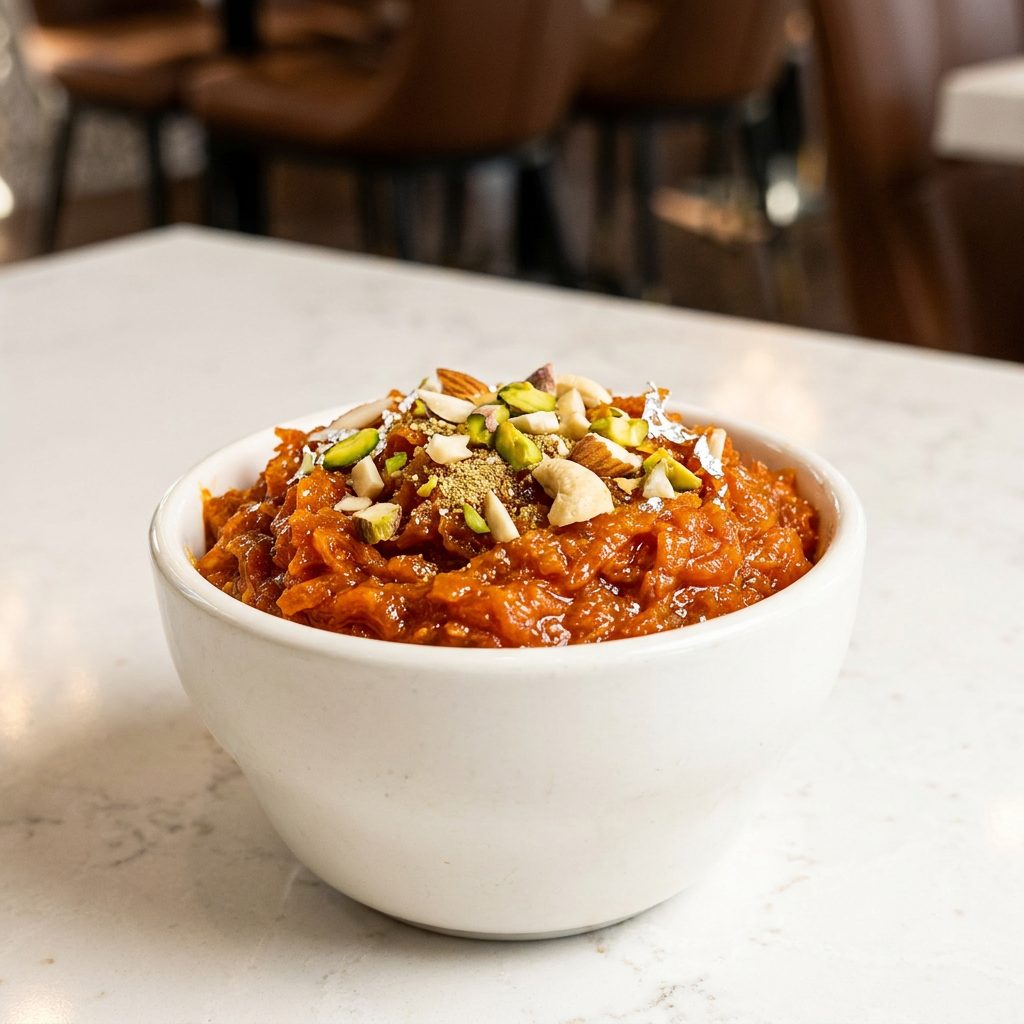
Slow-cooked shredded carrots simmered in milk, ghee, and sugar
Dish Information

Order Information
Let our chefs know how you'd like your dish prepared
0/200Gajar Halwa — Slow-Cooked Carrot Pudding with Milk, Ghee & Nuts at Raunak, Milpitas
Gajar Ka Halwa — known simply as *gajar halwa* — is North India's quintessential winter dessert, deeply tied to the harvest season and the festival of Lohri and Diwali celebrations in Punjab. The dish originated during the Mughal era, when the Dutch-introduced orange carrot reached the Indian subcontinent and was embraced by Punjabi cooks who slow-simmered grated carrots with milk, ghee, and sugar until the mixture transformed into a rich, dense pudding. The word *gajar* is Hindi for "carrot," and *halwa* is an Arabic-derived term for a dense, sweet confection. It is traditionally made in large batches during winter months when red Delhi carrots — sweeter and more tender than standard varieties — are at their peak. At Raunak, we grate fresh carrots and slow-cook them in full-fat milk until the liquid reduces and the carrots absorb every drop of richness. We finish with pure ghee, sugar, green cardamom, and a generous topping of cashews, almonds, and golden raisins. Served warm.
Nutrition notes
Gajar halwa is one of the more nutrient-dense Indian desserts. Carrots are rich in beta-carotene (vitamin A), supporting eye health and immune function. The milk base provides calcium and protein, while ghee — though calorie-dense — contains fat-soluble vitamins A, D, E, and K and conjugated linoleic acid (CLA). Nuts add heart-healthy fats, magnesium, and fiber. The slow-cooking process preserves much of the carrot's nutritional value.
Your order
Cart is empty
Add dishes from the menu to get started.